



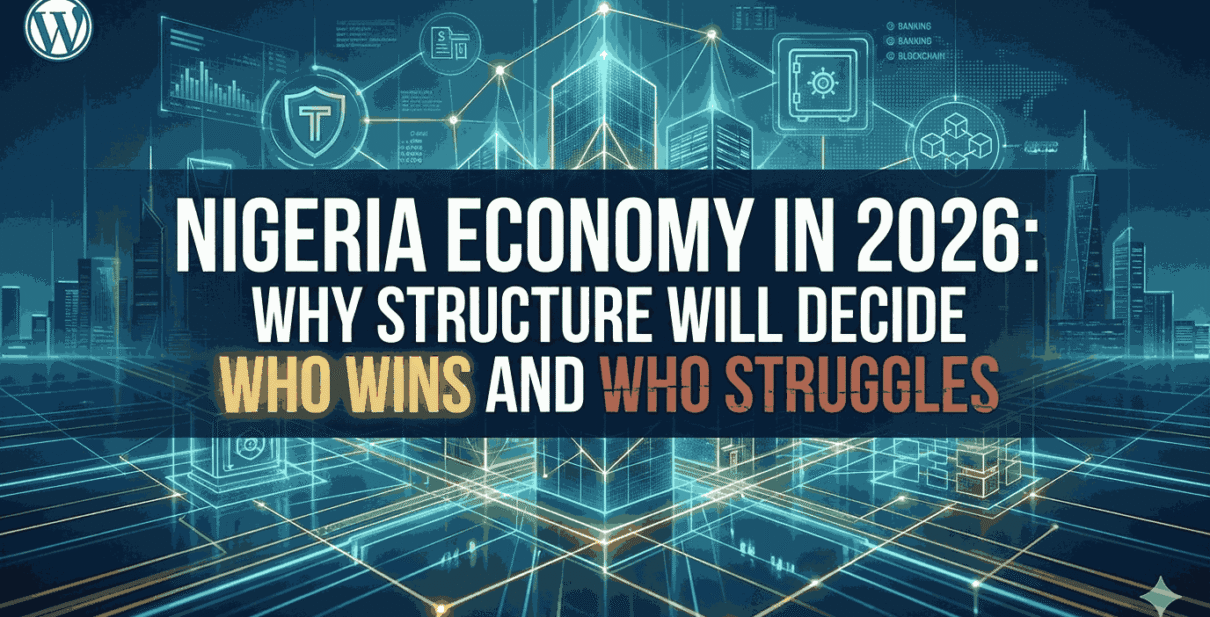
Happy New Year, but let’s be honest from the start. Nigeria economy in 2026 is not built for noise, vibes, or guesswork. It is built for structure. If you don’t understand what has already changed in Nigeria’s financial and policy environment, you may work harder this year and still fall behind.
This is not motivation. This is reality shaped by tax enforcement, banking reforms, data systems, and policy alignment.
Let’s break it down.
What Has Quietly Changed in Nigeria Economy in 2026
1. Nigeria Tax System Is Now Active and Enforced
The Nigeria tax system 2026 is no longer theoretical.
Tax is digital
Tax is traceable
Tax is structured
Money entering your account is now visible. Ignorance is no longer affordable.
If you don’t understand how your money is classified, click here to get started.
Most Read: How to Pay Zero Tax in Nigeria 2026
2. Banking Recapitalization Is Changing Money Flow
CBN recapitalization is forcing banks to:
Strengthen balance sheets
Increase inflows
Expand lending capacity
In Nigeria economy 2026, money will move faster, and policy always reveals where smart investors should watch.
3. Open Banking Makes Record Keeping Non-Negotiable
Open banking is now real.
Your:
Income
Spending
Patterns
…can speak across systems. This makes record keeping for tax in Nigeria no longer optional, whether you are a business owner or a professional.
Don’t Miss: Bank Transfer Narration and Tax in Nigeria: Why “Gift” Won’t Save You
4. GDP Rebasing Has Reset Old Assumptions
Nigeria’s 2025 GDP rebasing revealed:
A larger economy
New visible sectors
Outdated assumptions
Policy is now aligned to this reality. Old ways of running businesses will not survive Nigeria economy in 2026.
5. Inflation Is Cooling, Planning Is Back
Inflation dropped significantly, making:
Long-term planning realistic
Cost forecasting easier
Structured decisions smarter
This shift favors disciplined operators, not gamblers.
Trending: Will I Pay Tax on My Ajo? What Every Nigerian Needs to Know
What This Means for Investors in Nigeria Economy in 2026
This year will reward:
Systems
Patience
Long-term thinking
Ignore hype. Follow liquidity. Focus on compounding.
For Business Owners: Structure or Suffer
In the business structure in Nigeria, even a one-person business must now behave like a company.
Start With These Non-Negotiables
1. Pay Yourself a Salary
Separate personal life from business life. This single step improves clarity and tax positioning.
2. Open Two Bank Accounts
Receiving account
Expense account
This reduces tax confusion and protects you during assessments.
3. Keep Records, Any Way You Can
Whether digital or manual, consistency matters. Proper records support how tax is calculated in Nigeria.
The Tax Truth Most Nigerians Don’t Know
You do not pay tax on gross profit.
Understanding net profit vs gross profit Nigeria is critical.
Example:
Sales: ₦700,000
Cost of goods: ₦500,000
Gross profit: ₦200,000
But expenses like transport, power, storage, and communication reduce this to net profit, and that is what tax applies to.
Without records, authorities assume everything is profit. That’s how people overpay tax.
Professional tax strategy starts where public explanations stop.
Final Thought: Structure Is the New Survival Skill
In Nigeria economy in 2026, systems are not your enemy; they are filters. Businesses that embrace accountability scale faster, attract investors, and pay the right tax (not excess).
Fear disappears when clarity enters.
📍 Business Address:
B3 Suite 13 FF, Abisco Lane, Rauf Aregbesola Shopping Complex, Ipaja Road, Lagos State
📲 WhatsApp: https://wa.me/2348063830956
📸 Instagram: https://www.instagram.com/rexobeconsult?igsh=bmlia3NzdWo2dXBl
✔️ Distance is not a barrier
✔️ Consultations are paid, practical, and confidential







1 Comment