



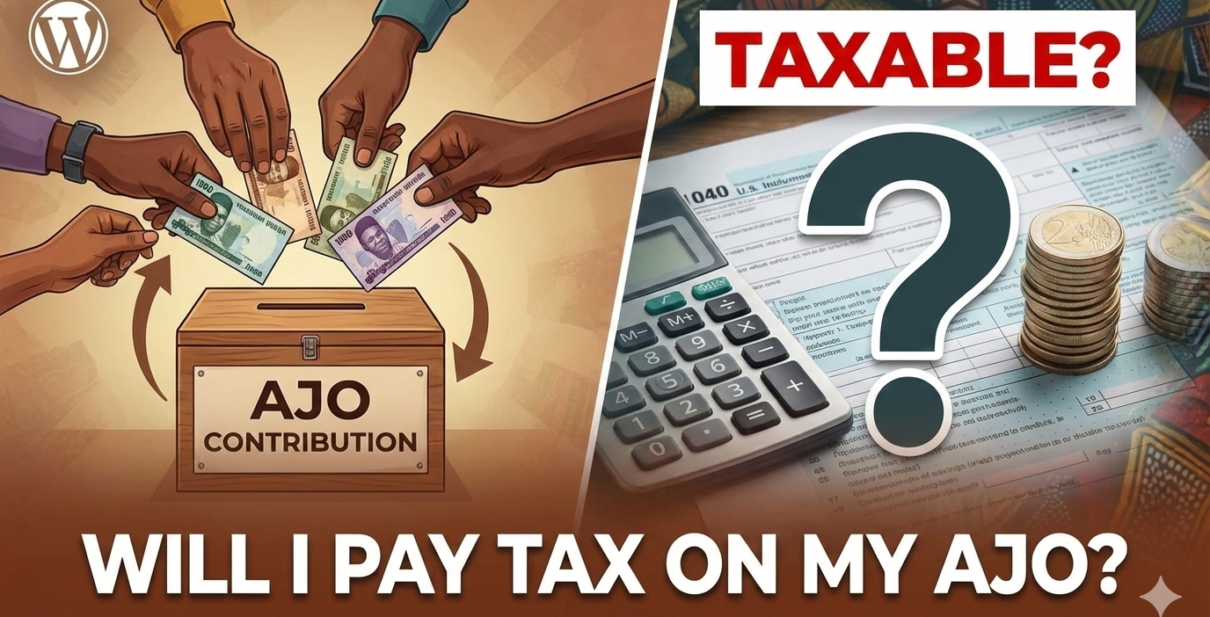
If you’ve ever asked will I pay tax on my ajo, you’re not alone. Ajo (also called Esusu or Adashe) is one of Nigeria’s most common savings systems, yet many contributors worry about unexpected tax issues.
Questions like will I pay tax on my contribution in Nigeria, will ajo be taxed, and how tax authorities treat traditional savings come up often — especially as financial monitoring increases. In this guide, I’ll explain the facts clearly, what is taxable, what is not, and where people usually make costly mistakes.
Will I Pay Tax on My Ajo Contributions?
Let’s answer the big question directly: will I pay tax on my ajo contributions?
No. Ajo contributions themselves are not taxable. Savings are not classified as income under Nigerian tax laws. If you are simply contributing your own money into a rotating savings scheme, there is no tax liability on the contribution.
This is why, when people ask will I pay tax on my contribution in Nigeria, the correct answer depends on whether the money is savings or income. Proper classification is everything.
Related Post: Bank Transaction Description and Tax in Nigeria: What You Must Get Right
📲 Unsure how your savings are being classified? Speak with an expert today
Will Ajo Be Taxed at All?
So, will ajo be taxed in any situation? The answer is: sometimes — but not the way people think.
Ajo itself is not taxed. However:
Interest or returns earned on ajo savings can be taxable
If your ajo funds are kept with a bank and earn interest, that interest is subject to withholding tax
The contribution remains tax-free; the earnings may not be
Understanding will ajo be taxed requires separating principal from returns. Mixing them up is where people get into trouble.
Will I Pay Tax on My Contribution in Nigeria If I’m an Alajo?
This is where things change. If you collect ajo as a business, tax applies differently. When people ask will I pay tax on my contribution in Nigeria, the answer is very different for an Alajo (savings collector).
If you earn a commission:
That commission is taxable income
Individuals or sole proprietors must pay Personal Income Tax to the State Internal Revenue Service
Registered companies must pay Companies Income Tax to FIRS
This distinction is critical when answering will I pay tax on my ajo as a collector versus a contributor.
💬 If you collect ajo or earn commission, professional tax structuring matters. Let’s talk
What Most People Get Wrong About Ajo and Tax
Many Nigerians unintentionally create tax problems because they:
Mix personal savings with business income
Fail to separate commission from contributions
Don’t document ajo transactions properly
This leads to confusion around will ajo be taxed and unnecessary assessments. Proper records and clear descriptions protect you.
Final Thoughts: Clarity Saves Money
Ajo remains a powerful savings tool — and when done correctly, it stays tax-efficient. The key is understanding when savings stop being savings and start becoming income.
If you’re still wondering will I pay tax on my ajo or how your role affects your obligations, getting professional advice early can save you penalties later.
📍 Office Address:
B3 Suite 13 FF, Abisco Lane, Rauf Aregbesola Shopping Complex, Ipaja Road, Lagos State
📲 WhatsApp: https://wa.me/2348063830956
📸 Instagram: https://www.instagram.com/rexobeconsult?igsh=bmlia3NzdWo2dXBl
✔️ Distance is not a barrier — we work with clients across Nigeria.
✔️ Consultations are paid, focused, and practical.







1 Comment